When developing modern medical devices, mixed cabling design is an absolutely critical challenge. These devices…
When to Choose THT Technology in Laboratory Equipment Design
THT (Through-Hole Technology) remains a particularly valuable solution for electronic equipment that requires mechanical robustness, strong connections and long-term reliability. In laboratory equipment, the choice between THT and SMD assembly should be based on PCB design, the components used and the operating conditions of each machine.
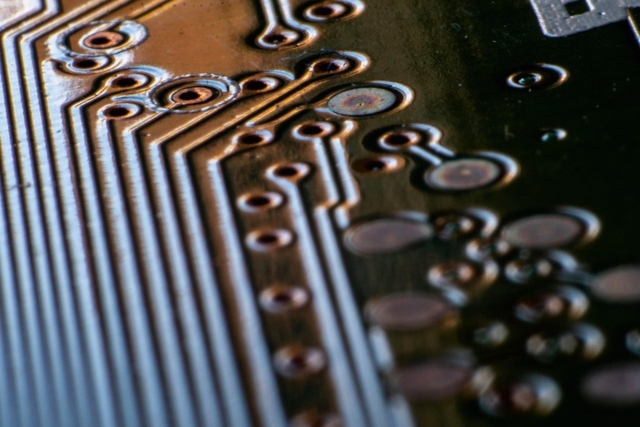
When should THT be used in laboratory machinery? Mainly when the PCB includes bulky components, connectors subject to frequent handling, relays, transformers, switches or elements that require particularly strong mechanical fixation. THT component leads physically pass through the printed circuit board before being soldered, creating a different mechanical joint from the one used in surface-mount assembly.
This does not mean that THT is always better than SMD. Both technologies can coexist on the same PCB, and the decision should depend on the specific requirements of the product. In fact, many industrial applications use mixed boards combining SMD and THT components.
When should THT technology be chosen for laboratory equipment?
The choice of assembly system depends on the working environment, electronic design, component type and the performance required from the equipment.
THT assembly is particularly useful when certain components require a high level of mechanical anchoring to the PCB or when surface mounting is not the most appropriate option because of their size or characteristics.
In practical terms, THT technology may be considered when:
- There are connectors that are repeatedly plugged and unplugged.
- The design includes transformers, relays, switches or larger components.
- Components are exposed to mechanical stress or vibration.
- The design combines SMD and THT components.
- Maintainability or replacement of certain components is part of the product requirements.
- The equipment is designed to operate for long periods and connection reliability is a priority.
Through-hole assembly provides mechanical advantages that explain why it continues to be used even though miniaturisation has driven the widespread adoption of SMD components.
Mechanical and thermal robustness: the key value of THT technology
In THT circuits, component leads pass through holes in the PCB and are subsequently soldered. This system provides mechanical anchoring that is particularly useful for certain components exposed to physical stress.
In laboratory machinery, this can be relevant for equipment with moving parts or demanding operating conditions, such as mixers, shakers, centrifuges, incubators, analysers or certain control and measurement systems.
Components that require high-strength fixation
In many laboratory equipment applications, connectors, transformers, relays, switches or terminal blocks may be exposed to repeated connection, disconnection or physical stress.
In these cases, through-hole anchoring can help the connection withstand mechanical loads, vibration or repeated handling more effectively.
For this reason, THT is often reserved for components where mechanical strength is especially important, while SMD makes it possible to optimise other factors such as component density, PCB size and assembly automation.
This complementary approach means that many modern boards use a hybrid THT + SMD design rather than relying exclusively on a single technology.
THT or SMD: which technology is better for laboratory machinery?
There is no universally better technology. The choice depends on the component and the circuit requirements.
In simplified terms:
- THT is often suitable for components requiring stronger mechanical fixation, connectors, relays, transformers or certain power components.
- SMD is particularly efficient when miniaturisation, high component density and highly automated assembly processes are required.
- THT + SMD combines the advantages of both technologies on the same PCB.
Therefore, when designing analytical machinery or scientific equipment, the decision should be made component by component and with the overall product in mind, rather than considering only the assembly method.
Electro Lomas has the capability to design, manufacture and assemble electronic circuits using THT and SMD processes, allowing the manufacturing strategy to be adapted to the needs of each project.
Wave soldering vs selective soldering in analytical machinery manufacturing
Once THT components have been selected, it is also necessary to determine how the joints between the leads and the printed circuit board will be made.
Electro Lomas works with both wave soldering and selective soldering, two processes suitable for different PCB configurations.
The choice mainly depends on factors such as:
- Distribution of THT components.
- Combination of THT and SMD technologies.
- Board geometry.
- Proximity of sensitive components.
- Production volume.
- Specific product requirements.
When should wave soldering be used?
Wave soldering is particularly efficient when the board contains many THT components and its design allows them to be processed together.
During this process, the PCB comes into controlled contact with a wave of molten solder, enabling multiple joints to be formed during the same operation. This can provide high productivity for suitable configurations and production volumes.
When should selective soldering be used?
Selective soldering makes it possible to work on specific points or areas of the PCB instead of exposing the entire underside of the board to the same soldering process.
This makes it particularly useful for mixed THT and SMD boards, high-density designs or configurations where certain components located close to THT joints require greater protection from thermal exposure.
The choice between wave and selective soldering therefore does not depend solely on the number of components, but also on the PCB’s DFM (Design for Manufacturing) strategy.
Which laboratory devices can use THT circuits?
THT technology can be found in many types of machinery whenever the characteristics of the circuit and its components justify its use.
Within the laboratory sector, examples include:
- Analytical equipment.
- Incubators.
- Centrifuges.
- Mixers and shakers.
- Measurement and control systems.
- Scientific instrumentation.
- In vitro diagnostic equipment.
- Electromechanical systems associated with laboratory processes.
Electro Lomas specifically works with the Laboratory sector and has experience manufacturing electronic circuits and assemblies for this field.
Frequently asked questions about THT technology in laboratory machinery
What does THT mean in electronics?
THT stands for Through-Hole Technology. It is an assembly method in which component leads are inserted through holes in a printed circuit board and subsequently soldered.
Is THT more robust than SMD?
THT can provide particularly strong mechanical fixation for certain types of components, but this does not mean that it is superior to SMD in every application. The right technology depends on the component, operating conditions, available space, PCB design and manufacturing process.
Can THT and SMD components be combined?
Yes. Mixed THT and SMD PCBs are common when some components benefit from surface mounting while others require through-hole characteristics. Selective soldering can be especially appropriate for certain designs of this type.
What is the difference between wave soldering and selective soldering?
Wave soldering can process multiple PCB connections using a solder wave, whereas selective soldering works locally on specific points. The latter is particularly useful when the board combines technologies or includes nearby components that should not be exposed to the same thermal process.
THT circuit manufacturing for laboratory equipment
THT technology continues to play a relevant role in the design and manufacture of electronics for laboratory machinery, especially when certain components require strong mechanical fixation or when the project combines different assembly technologies.
The key is not to choose THT or SMD in generic terms, but to analyse the PCB architecture, components, operating conditions and industrialisation process in order to determine the most suitable solution.
At Electrolomas, we design, manufacture and assemble electronic circuits using THT and SMD technologies, as well as wave and selective soldering processes. If you are developing analytical machinery or laboratory equipment, our team can assess the technical and manufacturing requirements of your project.
Related Posts