
Electromechanical engineering for medical diagnostic equipment
Are you developing diagnostic or laboratory equipment? Electrolomas collaborates with diagnostic equipment manufacturers who need to transform a complex architecture into a manufacturable, repeatable, and maintainable product. We integrate
electronics, mechanics, cabling, motion, auxiliary fluids, and thermal control, according to project requirements. We participate in the technical review, prototyping, industrialization, and mass production, coordinating specialized components and suppliers to reduce risks and
simplify the final assembly.
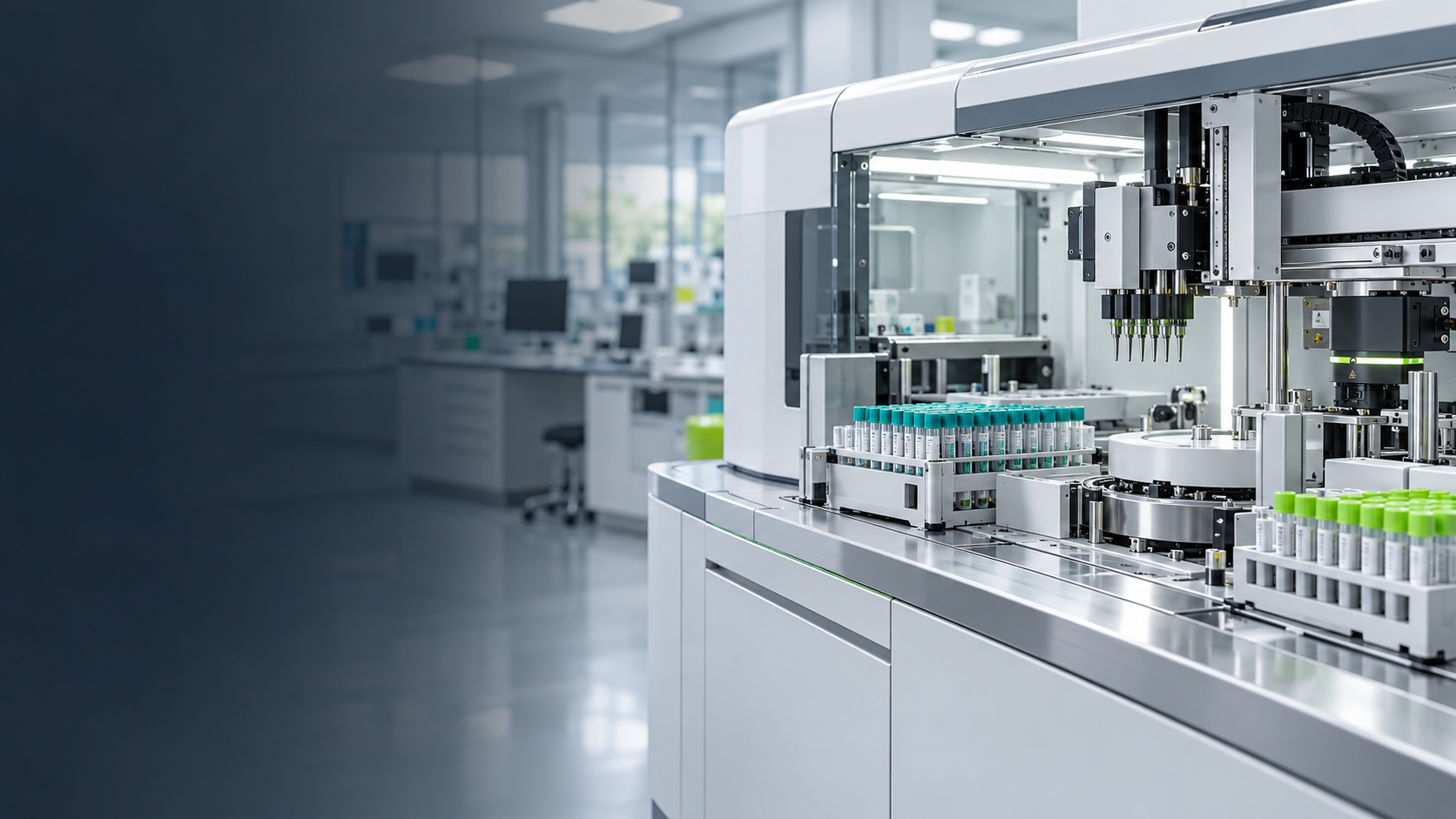
Design and development of in-vitro laboratory machinery
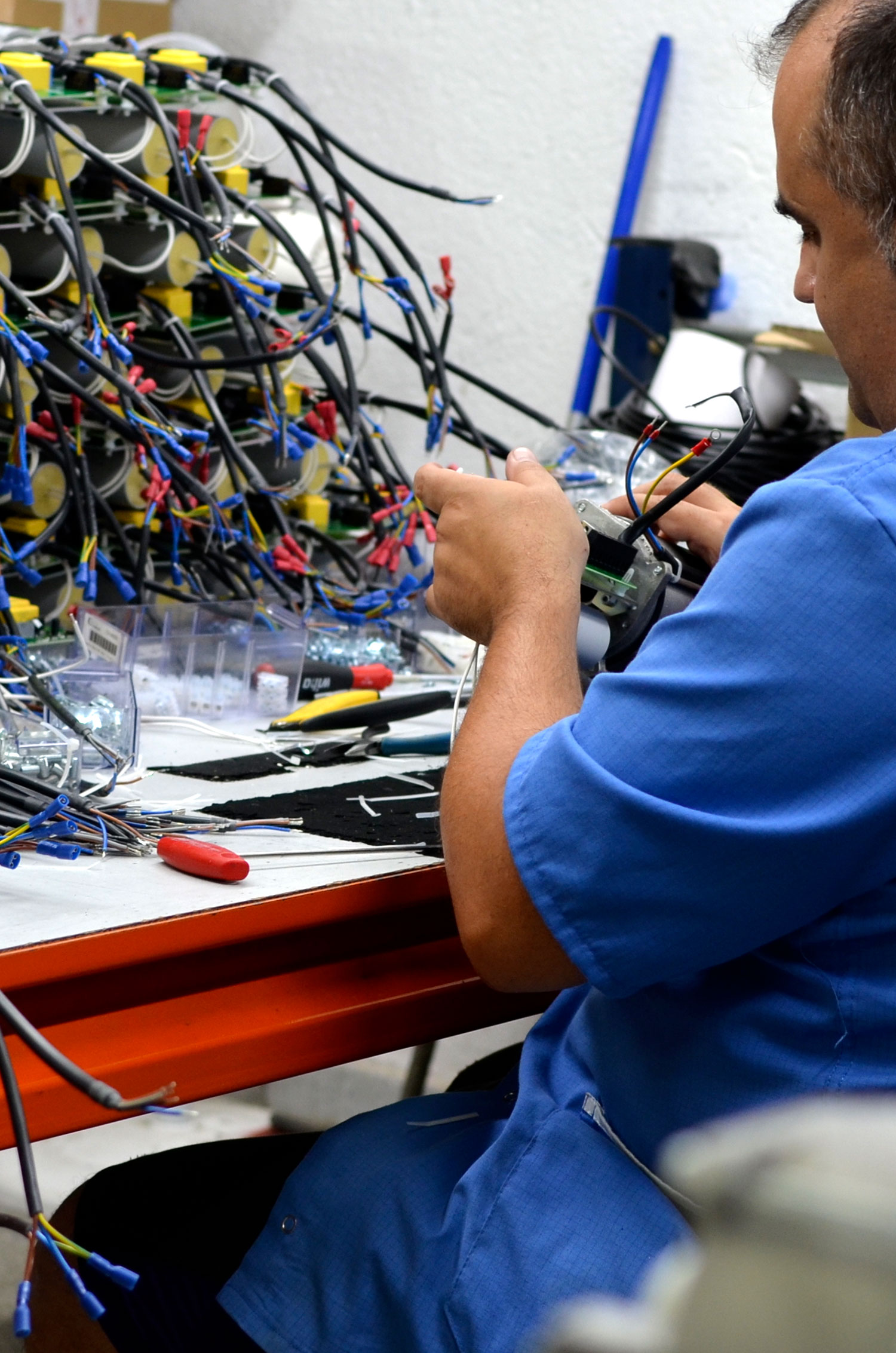
Precision and automation for consistent results
We can manufacture subassemblies or take on the complete assembly of the equipment, including functional verification, traceability, packaging, and logistics.
• Precision motion: motors, actuators, guides, positioning, and limit switches.
• Thermal control: heating, cooling, insulation, sensors, and regulation.
• Automation: sequences, interlocks, dispensing, transport, and handling.
• Electronics and control: boards, power supplies, interfaces, communications, and embedded software.
• Specific wiring: harnesses, connectors, protective elements, and routing adapted to the equipment.
Electromechanical components for medical imaging equipment
• Mechanical integration: chassis, enclosures, supports, and subassemblies ready for validation. • Mechanical integration: chassis, enclosures, supports, and subassemblies ready for validation.
Precision, reliability, and calibration
In diagnostic equipment, accuracy depends on mechanical, thermal, and electronic stability. We manufacture under ISO 9001 and ISO 13485 management systems and define controls.
Precise movement
functional and calibration [tests/procedures] in accordance with specifications, intended use, and client documentation.
Thermal stability
Coordinated heating, cooling, and regulation to maintain process conditions within tolerances.
Calibration and verification
Documented testing, controlled parameters, and traceability to ensure consistent performance across units.
<strong>1. Review of requirements:</strong> architecture, precision, thermal control, automation, and risks.
<strong>2. Prototyping:</strong> integration of mechanics, electronics, motion, and software.
<strong>3. Industrialization:</strong> optimization for manufacturing, assembly, calibration, and maintenance.
<strong>4. Supply chain:</strong> selection, procurement, and coordination of critical components.
<strong>5. Manufacturing:</strong> cabling, electronics, subassemblies, and complete assembly.
Industrialization of reliable diagnostic equipment
<strong>6. Verification and logistics:</strong> testing, calibration, traceability, packaging, and after-sales.
• Clinical analyzers and in-vitro diagnostic systems.
• Sample preparation and handling equipment.
• Automated laboratory platforms.
• Optical, acquisition, and control modules.
• Incubation, refrigeration, and thermal regulation systems.
• Positioning and manipulation subassemblies for medical imaging equipment.
Common applications
Frequently asked questions about medical diagnostic equipment
• Peripherals and accessories for diagnostic equipment. We can collaborate on analyzers, sample preparation, laboratory automation, and other equipment that integrates electronics, motion, thermal control, wiring, and
What laboratory and in-vitro equipment can you develop or manufacture?
mechanical assemblies.
What laboratory and in-vitro equipment can you develop or manufacture?
mechanical assemblies. Yes. We integrate motors, actuators, guides, sensors, heating, cooling, and their control systems according to the equipment’s technical requirements.
What laboratory and in-vitro equipment can you develop or manufacture?
Checkpoints, tooling, tolerances, and records are defined based on customer specifications to incorporate calibration and verification into the process.
Do you work from an already developed design?
Yes. We can manufacture based on existing documentation, or participate in its review and industrialization to improve repeatability, assembly, testing, and maintenance.