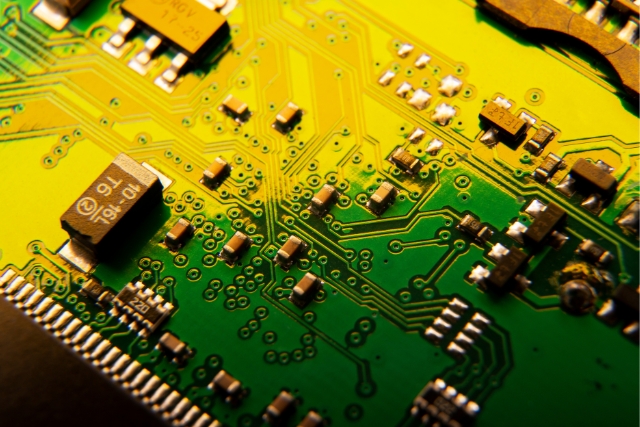
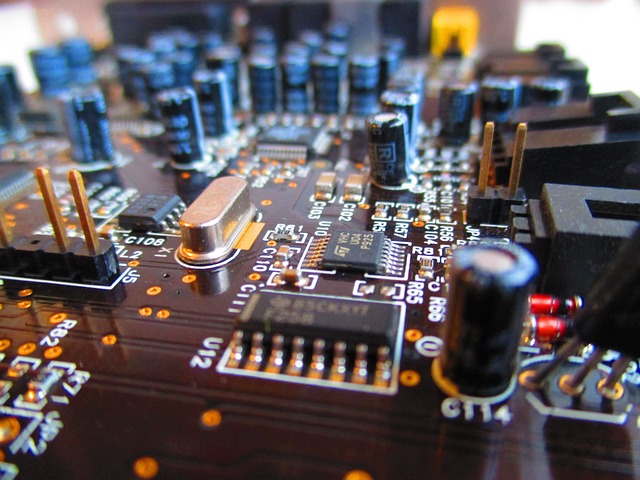
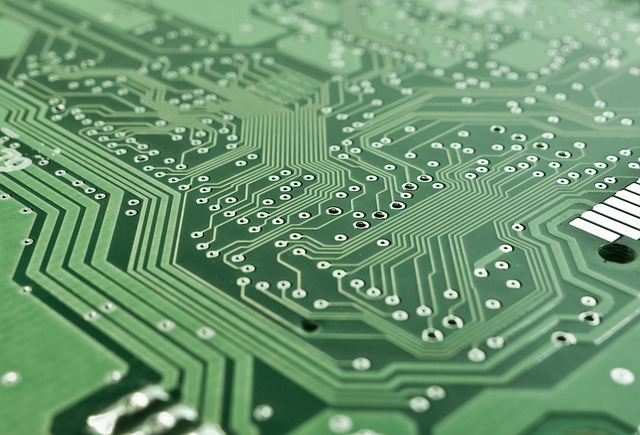
Flexible electronic circuits for wearables allow advanced electronics to be integrated into curved surfaces…
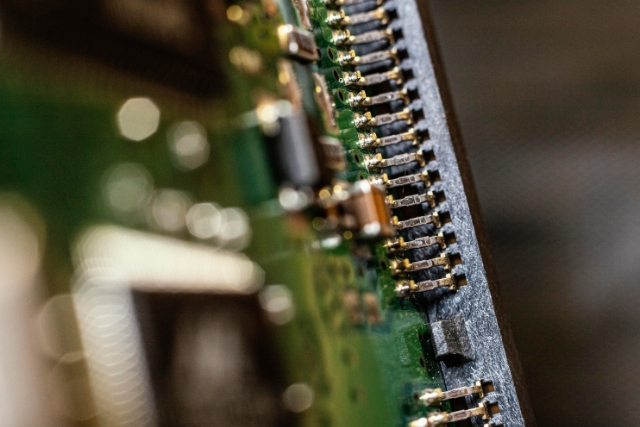
Flexible Electronic Circuit Manufacturing: Applications and Advantages in Industry
Flexible electronic circuits are gaining traction in numerous industries. This innovation is capable of adapting to available space and shape. Various sectors are already taking advantage of their benefits, but how are they manufactured and what advantages do they offer?
Flexible Electronic Circuit Manufacturing in Industrial Applications
These circuits are interconnection systems manufactured on plastic substrates, such as polyester, which can be bent, curved, or adapted to complex geometries. Thanks to these characteristics, they become a suitable solution for producing devices with advanced designs.
When manufacturing them, the techniques used are similar to those employed to produce a rigid circuit. First, a conductive sheet, usually copper, is deposited onto a flexible substrate. Then, coating layers are added to protect the conductive traces, and, if necessary, localized reinforcements are applied to increase durability and connection density.
Due to their nature, flexible circuits offer a wide range of advantages. One of the most important is their ability to reduce the number of connections and mechanical components. This decreases the likelihood of failures and simplifies assembly. At the same time, they allow for the manufacture of three-dimensional designs, which optimize the internal space of devices and reduce the overall weight of the system.
Regarding their industrial applications, flexible circuit boards can be found in consumer electronics, such as foldable displays and smartphones. They are also used in the automotive sector, where they are integrated into lighting systems, sensors, and control panels, as they withstand vibrations. These circuits are essential for the medical industry in the production of biometric sensors and diagnostic equipment.
Advantages of Flexible Circuits Compared to Traditional Rigid Circuits
One of their major advantages is the reduction in volume. Because they can be bent or integrated into three-dimensional structures, flexible circuits eliminate the need for multiple layers interconnected by wires or connectors. This simplifies the design and reduces the board’s footprint. Furthermore, their lighter weight allows them to be integrated into small devices.
In addition, their design is unrestricted. Unlike rigid circuits, which impose clear geometric limitations, flexible circuits allow for more complex configurations, adapted to irregular housings or dynamic mechanisms. This enables innovative designs, such as foldable or rollable devices, whose integrity is not compromised by their characteristics.
Finally, assembly processes are simplified, as flexible circuits can be installed as a single unit. This reduces production times and the costs associated with excessively long production lines. As can be seen, flexible electronic circuits are a source of innovation. This is all thanks to their remarkable characteristics that allow them to adapt to very demanding conditions, whether in a small device or one that can be bent. At Electrolomas, we are experts in producing these types of solutions tailored to our clients’ needs.
Related Posts