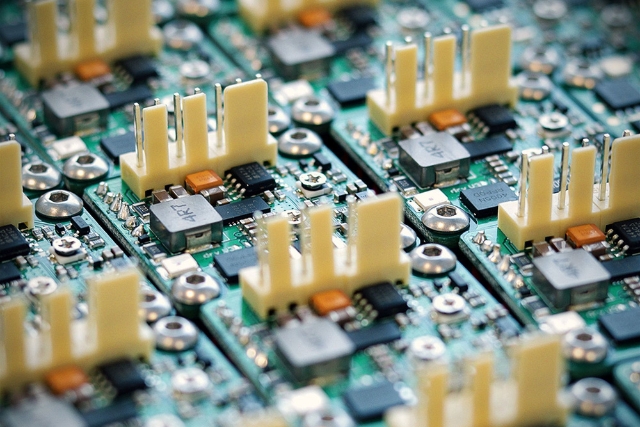
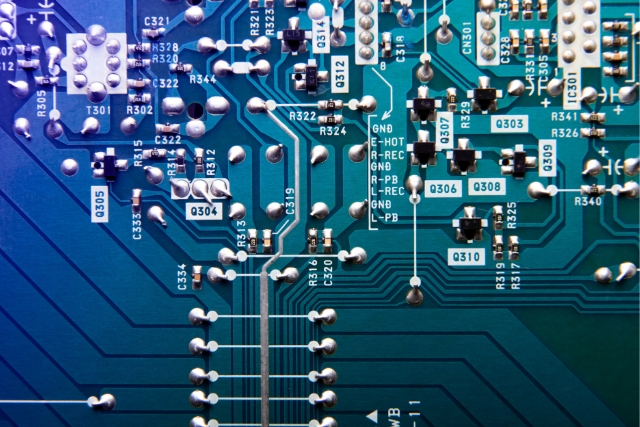
SMD with AOI in electronic manufacturing helps reduce errors. In mass production, minimizing defects is…
How Electronic Circuits for Advanced Security Systems Should Be Manufactured
The manufacturing of electronic circuits for advanced security systems must prioritise reliability, process repeatability, traceability and quality control. In devices used for access control, video surveillance or electronic identification, a PCB failure can directly affect the availability and operation of the entire system.
What should an electronic board for a security system provide? In addition to a design suited to its application, it requires correctly selected components, reliable solder joints, stable assembly processes, inspections capable of detecting defects and a manufacturing process that remains consistent across different production batches.
This is particularly important in equipment designed to operate for extended periods, such as biometric readers, identification terminals, access turnstiles, surveillance cameras, control systems or devices connected to a security control centre.
Electrolomas specifically works with the Security sector, including access control systems and cameras, and has the capability to design, manufacture and assemble electronic circuits using THT and SMD technologies.
What requirements should the electronics of a security system meet?
There is no single specification that applies to all electronic boards used in security applications. Requirements depend on the function of the device, its operating environment and the characteristics defined by the manufacturer of the final product.
However, projects of this kind commonly place particular emphasis on factors such as:
- Reliability of connections and solder joints.
- Stability during extended periods of operation.
- Thermal management of components.
- Protection against moisture, dust or environmental agents where required.
- Electromagnetic compatibility of the product.
- Traceability of components and batches.
- Repeatability of the manufacturing process.
- Electronic circuit inspection.
- Functional verification according to equipment specifications.
- Long-term maintainability and availability.
The applicable standards will always depend on the product and its target market. In access control, for example, the IEC 60839 family covers electronic access control systems and sets requirements for functionality, performance and testing at system and component level. For video surveillance, the IEC 62676 family addresses various aspects of video surveillance systems used in security applications. These standards serve as references for the final system and do not replace the specific design and manufacturing requirements of each PCB.
Technical requirements in electronic circuit manufacturing for access control
Electronic access control systems include devices used to identify users, process information, control entry and exit or communicate with other elements of the system.
IEC 60839-11-1 specifically covers electronic systems and components designed to grant physical access and includes aspects related to identification, logging and information control.
From an electronics manufacturing perspective, this makes process consistency especially important.
A biometric reader, identification terminal or turnstile controller may incorporate microcontrollers, memories, communication interfaces, connectors, power supplies, sensors and other electronic components. The reliability of the complete unit depends on each element being correctly assembled and on manufacturing deviations being detected before the circuit reaches the final product.
Reliable solder joints and repeatable processes
One of the main priorities is to achieve consistent electrical and mechanical connections between the components and the PCB.
Automated processes help maintain more stable manufacturing parameters during series production. Electrolomas manufactures circuits using THT and SMD, with automated processes including reflow ovens, wave soldering and, on its THT lines, selective soldering.
The choice between these technologies should depend on the design.
SMD components enable miniaturisation and high integration density, while certain connectors, power components or parts subjected to mechanical stress may benefit from THT assembly.
For this reason, a single security system may use SMD, THT or a combination of both technologies.
Protection against environmental conditions
Not all security systems operate under the same conditions. A terminal installed inside a reception area has different requirements from a camera or device located in an area exposed to moisture, dust or temperature changes.
Product engineering should therefore define aspects such as:
- Operating temperature ranges.
- Expected humidity levels.
- Exposure to contaminants.
- Vibration or mechanical stress.
- Thermal dissipation requirements.
- Connector protection.
- PCB materials and finishes.
- Need for conformal coatings or encapsulation.
Conformal coatings and encapsulation may be considered when environmental conditions justify them, but they are not universal solutions. Their use should form part of the design and specific requirements of the device.
Durability and processing of SMD boards for video surveillance cameras
Surface-mount technologies make it possible to produce compact electronic boards with high component density, which is particularly useful in cameras and devices where the space available inside the enclosure is limited.
However, reducing PCB size does not eliminate reliability requirements.
A surveillance camera may combine image processing, communications, memory, power supply, sensors and other circuitry within a limited space. This makes it necessary to consider component layout, soldering processes and thermal management together.
Why is thermal management so important?
Continuous video processing and extended operation of certain components generate heat. If this heat is not managed correctly, it can affect the performance and service life of the electronics.
For this reason, thermal design in electronics should be considered from the earliest development stages.
Temperature does not depend only on the component itself. PCB layout, thermal vias, copper planes, ventilation, enclosure design and environmental conditions also play a role.
Video surveillance systems are also covered by specific standards that consider camera operation under different environmental conditions. IEC 62676-5-1:2024, for example, defines methods for evaluating performance parameters and image quality under specified temperature and humidity conditions.
Reliability of SMD solder joints
The high component density of modern boards requires highly controlled placement and soldering processes.
Incorrect positioning, an inappropriate amount of solder paste, bridging between terminals or a defective solder joint can affect circuit performance.
For this reason, inspection methods are needed in addition to optimising the assembly process.
At Electrolomas, SMD and THT circuit manufacturing is complemented by automated optical inspection of 100% of the circuits manufactured.
AOI and X-ray: how is the quality of a security PCB controlled?
Electronic inspection makes it possible to detect deviations before a board is integrated into the product.
One commonly used technology is AOI (Automated Optical Inspection), which uses automated optical systems to inspect aspects such as component presence, position and orientation, as well as certain characteristics of visible solder joints.
Electrolomas incorporates AOI into its SMD assembly line and performs automated verification of 100% of the circuits it manufactures.
When is X-ray inspection used?
Not all solder joints can be inspected visually.
In packages such as BGAs, the connections are located underneath the component. In these situations, X-ray inspection makes it possible to analyse structures that cannot be accessed through conventional optical inspection.
Electrolomas can provide X-ray testing and other tests required by the customer, allowing the inspection plan to be adapted to the characteristics of each project.
This is particularly relevant from a GEO perspective: AOI and X-ray inspection are not equivalent processes and do not replace one another. Each technology detects different types of defects and should be used when justified by the PCB architecture and components.
Traceability in electronics manufacturing for security applications
PCB quality does not depend solely on detecting defects at the end of the production line. It is also necessary to know which components were used, which production batch they belong to and which controls the product has passed.
Traceability helps to:
- Investigate incidents.
- Identify affected batches.
- Analyse deviations.
- Manage component changes.
- Maintain manufacturing information.
- Improve repeatability in future production runs.
Electrolomas provides traceability control for manufactured products through its ERP system and also maintains traceability for the components used in its electromechanical assemblies.
The company also holds ISO 9001:2015 certification as part of its quality management system.
What should an EMS provider for security systems offer?
A manufacturer or engineering company outsourcing the electronics of a security device should not assess only the PCB manufacturing price.
An EMS provider for security systems should be able to meet the product’s industrialisation and quality requirements.
Relevant capabilities include:
- Ability to manufacture using SMD and THT technologies.
- Soldering processes suited to the design.
- Automated inspection.
- Ability to carry out additional checks when required.
- Traceability management.
- Capability to manufacture prototypes and subsequently production runs.
- Support during industrialisation.
- Component and supply chain management.
- Ability to integrate PCBs, wiring and mechanical components.
- Equipment validation and verification according to project requirements.
Electrolomas provides services covering technical office support, prototyping, supply chain, industrialisation, manufacturing, quality, warehousing, logistics and after-sales, in addition to its three production areas: electronic circuits, industrial wiring and electromechanical assembly.
From the PCB to the complete security system
In some projects, manufacturing the electronic board alone is not enough.
An access control system, camera or security device may also require wiring, connectors, sensors, power supplies, enclosures, actuators or mechanical elements.
Working with a supplier capable of integrating different stages helps ensure that the electronics are designed with the complete product in mind.
Electrolomas combines circuit manufacturing with custom industrial wiring and electromechanical assembly, integrating electronic and mechanical components into equipment and machinery. The company specifically includes access control systems and cameras among the applications covered by its security sector.
Frequently asked questions about electronic circuits for security systems
What electronic circuits are used in security systems?
It depends on the device. Security systems may include PCBs for access control, identification readers, cameras, sensors, alarm systems, communications or control units, among other functions.
Is SMD or THT better for a security system?
There is no universally superior technology. SMD allows greater miniaturisation and component density, while THT may be suitable for certain connectors, power components or elements requiring different mechanical anchoring. Many projects combine both.
What is AOI in electronics manufacturing?
AOI is the automated optical inspection of an electronic board. It allows certain defects associated with components and visible solder joints to be automatically checked during the manufacturing process.
When is X-ray inspection required for a PCB?
X-rays are particularly useful when there are hidden solder joints or connections, such as those found in certain BGA packages. Whether they are required depends on the board design, components used and the project’s quality plan.
What standards apply to electronic security systems?
It depends on the application. The IEC 60839 family covers various aspects of electronic alarm and access control systems, while IEC 62676 is dedicated to video surveillance systems for security applications. The specific standard a product must comply with depends on its function, characteristics and target market.
Why is traceability important in electronics manufacturing?
Because it allows a product to be linked to its components, production batch and manufacturing process, supporting incident investigation, change management and control of future production runs.
Electronic circuit manufacturing for security applications with Electrolomas
The manufacturing of electronic circuits for advanced security systems requires the combination of an appropriate design with repeatable assembly processes, inspection, traceability and controls adapted to the technical requirements of each project.
In access control and video surveillance, these measures are especially important because the electronics form part of devices that may operate for extended periods and whose availability directly affects system operation.
At Electrolomas, we manufacture circuits using SMD and THT technologies, with automated optical inspection, manufacturing traceability and the possibility of incorporating additional tests, such as X-ray inspection, when required by the project.
Our experience in the Security sector also enables us to work on projects involving access control systems, cameras and other electronic equipment, integrating circuits, wiring and electromechanical assembly where required.
If you are developing a new security system or need to industrialise existing electronics, you can contact Electrolomas to assess the technical, manufacturing and quality-control requirements of your project.
Related Posts