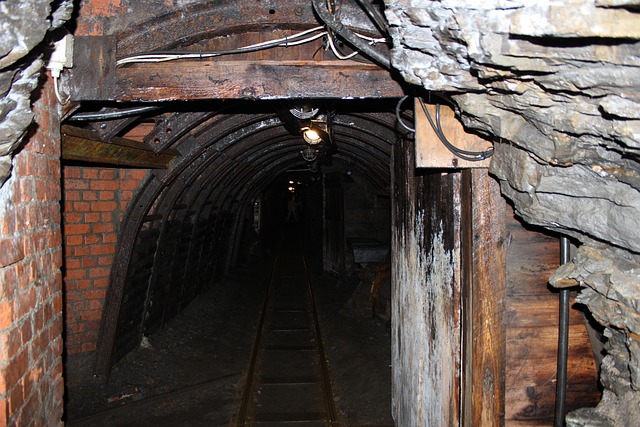
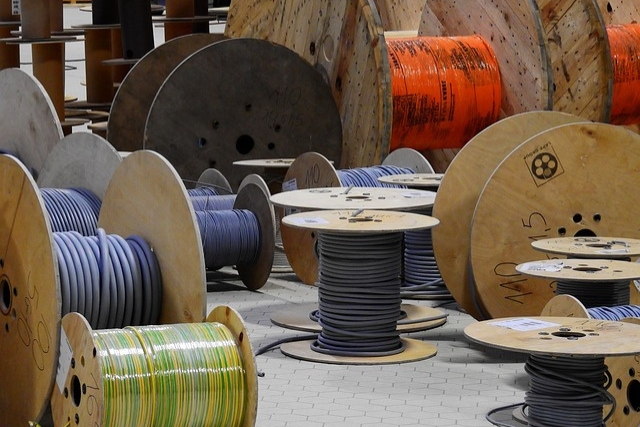
Mining is one of the most demanding environments for electrical systems, so much so that…
How to Design Custom Special Industrial Wiring for Your Machinery
Custom special industrial wiring must be designed according to the electrical, mechanical and environmental characteristics of the machine in which it will be installed. Selecting a cable is not enough: conductors, cross-sections, lengths, connectors, insulation, routing, bending radii, protection systems and, where necessary, shielding against electromagnetic interference must all be defined.
The goal is to create a cable assembly or industrial wiring harness that integrates correctly into the machinery, withstands real operating conditions and simplifies both assembly and future maintenance tasks.
For this reason, the manufacture of customised wiring always starts with a proper technical definition of the project. Electrolomas has a dedicated unit for custom industrial wiring and can develop the design according to product requirements or manufacture the assembly based on drawings and specifications provided by the customer.
What needs to be defined before designing special industrial wiring?
The first step is to understand how and where the wiring will operate. Two machines may use similar voltages yet require completely different connection solutions because of temperature, movement, available space, chemicals or interference.
Before manufacturing a cable assembly, it is advisable to define at least:
- Voltage, current and power each line must support.
- Required conductor size and number of conductors.
- Length of each branch and physical distribution inside the machine.
- Signal type: power, control, data, sensors or communications.
- Minimum and maximum operating temperature.
- Presence of oils, chemicals, moisture, dust or abrasive agents.
- Repetitive movement, torsion or vibration.
- Available space and bending radii.
- Connectors, terminals and fixing points.
- Need for shielding or protection against electromagnetic interference.
- Identification, maintenance and traceability requirements.
- Standards and specifications applicable to the final product.
This preliminary analysis makes it possible to turn the functional requirements of the machine into a manufacturable and repeatable industrial wiring specification.
In addition, when dealing with the electrical equipment of machinery, the design must take into account the technical and regulatory requirements applicable to the product. IEC 60204-1, for example, sets out general requirements for electrical, electronic and programmable electronic equipment of machines and includes aspects related to protection, documentation and electromagnetic compatibility.
Key factors when selecting and manufacturing special industrial wiring
Once the requirements have been defined, the components making up the assembly can be selected.
The best industrial wiring is not necessarily the one that uses the toughest materials, but the one whose characteristics properly match the actual operating conditions of the machine. Unnecessarily oversizing an assembly can increase cost, volume and installation difficulty without providing a functional benefit.
This is why the conductor, insulation, outer sheath, connectors, terminals and mechanical protection elements should all be assessed together.
How should cable insulation be selected?
The insulation and sheath material directly affects the cable’s performance under temperature, abrasion, chemicals, moisture and movement.
PVC is a common option for many standard industrial applications. PUR, by contrast, is often used where there are higher mechanical requirements, exposure to oils, abrasion or movement. Other materials such as silicone, FEP or PTFE may be appropriate when the project requires operation over more demanding temperature ranges or under specific chemical conditions.
Therefore, there is no universally superior insulation material. The choice should depend on the environment in which the equipment will operate and on the specifications of the selected cable.
When does an industrial cable need shielding?
Shielding becomes particularly important when signals may be affected by electromagnetic interference (EMI).
Motors, variable frequency drives, power supplies, power lines and certain electronic systems can generate electromagnetic disturbances. In sensitive applications, a correctly shielded cable combined with an appropriate installation strategy can help preserve signal integrity.
This is particularly relevant when power lines and control, communication or instrumentation signals coexist within the same equipment.
However, simply adding shielding does not solve every EMC problem. Cable routing, separation from power lines, shield termination and the overall equipment design must also be considered.
How is a custom industrial wiring harness manufactured?
Once the design has been defined, manufacturing converts the drawings and specifications into a wiring assembly ready to be integrated into the machine.
At Electrolomas, industrial wiring work includes processes such as cutting and stripping cables and multi-core cables, crimping terminals and ferrules, and fitting connectors. The company also has the capability to work with specific wiring systems and complex assemblies or projects with a high degree of manual work.
The result can range from a relatively simple connection system to an assembly with multiple branches, references, connectors and terminations.
The importance of crimping and connectors
Connectors and terminals are critical points within any wiring harness. Their selection should take into account current, voltage, number of connection cycles, available space, operating environment and equipment requirements.
Crimping should be carried out using compatible terminals and tools and in accordance with the parameters defined for the assembly. A correctly executed connection provides a stable electrical and mechanical joint and improves repeatability when the product enters series production.
It is also important to define from the design stage how cables, connectors and branches will be identified. A good marking system simplifies assembly, diagnostics, maintenance and component replacement.
How should wiring be routed inside a machine?
Designing custom wiring does not end with material selection. Its physical integration within the equipment also affects reliability.
Cables should not be exposed to unnecessary tension, unsuitable bending radii, continuous contact with sharp edges, heat sources or moving parts that could damage them.
In complex equipment, it is also advisable to plan from the early stages the separation between power and signal lines, fixing points, areas accessible for maintenance and the space required for connection and disconnection.
This planning also contributes to a design prepared for manufacturing and assembly, avoiding improvised changes during production.
From special wiring to complete electromechanical assembly
One of the main advantages of working with a manufacturer that also carries out electromechanical assembly is the ability to treat the connection system as part of the complete equipment rather than as an isolated element.
Electrolomas structures its activity around three related areas: electronic circuits, custom industrial wiring and electromechanical assembly. In the latter, electronic and mechanical components are integrated for the partial or complete manufacture of equipment and machinery.
This allows the wiring to be designed from the outset with its connections to PCBs, power supplies, sensors, actuators, solenoid valves, control systems and other electromechanical components in mind.
This approach is particularly useful in projects where the manufacturer wishes to outsource a significant part of the industrialisation process and receive subassemblies or equipment ready to move on to the next production stage.
Verification and traceability before delivery
Verification is another important stage in the manufacturing process. The control plan should be defined according to the product, its application and the requirements specified by the customer.
Electrolomas works with validation, verification and traceability systems adapted to the requirements of each project. Depending on the application, different electrical, mechanical or visual inspections can be incorporated before the assembly is integrated into the machinery.
These checks help detect potential issues before the wiring becomes part of the final product.
What are the advantages of designing wiring specifically for the machine?
The main advantage of custom special industrial wiring is that each element is defined for a specific application.
This makes it possible to adapt lengths and routes to the available space, select materials according to the environment, reduce unnecessary connections, improve internal organisation and simplify both manufacturing and subsequent maintenance.
It can also simplify the assembly process when the wiring arrives pre-prepared, identified and fitted with the required connectors and terminals.
For this reason, in complex industrial projects it is particularly useful to involve the wiring manufacturer from the design or industrialisation stages, rather than leaving connection design until the final phases.
Frequently asked questions about custom special industrial wiring
What is special industrial wiring?
Special industrial wiring is an assembly of cables, conductors, connectors, terminals and protection elements designed to meet the specific requirements of a machine or piece of equipment. It may differ from a standard solution in terms of geometry, materials, connections, environmental resistance or electrical characteristics.
What is the difference between a cable and a wiring harness?
A cable is an individual conductive element with its corresponding insulation and, where applicable, outer sheath. A wiring harness or cable harness groups different cables and connections into an assembly prepared to provide specific interconnections inside a machine.
Can wiring be manufactured from customer drawings?
Yes. Electrolomas can develop the design according to the needs of the product or manufacture the wiring based on drawings and specifications provided by the customer.
When should PUR be used instead of PVC?
It depends on the specific cable formulation and specifications, but PUR is often used in applications with higher mechanical requirements, abrasion, oils or movement, while PVC is widely used in standard industrial applications. The final choice should always be made according to the product datasheet and actual operating conditions.
Do all industrial cables need shielding?
No. Shielding should be used when the signal characteristics and electromagnetic environment justify it. It may be necessary in installations sensitive to EMI, but it should form part of an overall electromagnetic compatibility strategy.
Can the wiring be integrated directly into the machinery?
Yes. When the supplier also has electromechanical assembly capabilities, the wiring can be integrated together with other electronic and mechanical components. Electrolomas offers industrial wiring, electronic manufacturing and equipment assembly within the same service structure.
Design and manufacture of special industrial wiring at Electrolomas
Correctly designing custom special industrial wiring involves much more than choosing a conductor. The electrical characteristics of the machine, its environment, available space, movement, temperature, connections, interference and manufacturing requirements must all be assessed.
Good engineering in the early stages makes it possible to turn all these variables into a wiring assembly ready to be efficiently integrated into the final product.
At Electrolomas, we can design and manufacture wiring and electrical connections according to product requirements or work from technical documentation provided by the customer. In addition, our EMS electromechanical equipment assembly services make it possible to integrate the wiring with the other components of the equipment within the same production process.
The company works in sectors such as medical and healthcare, laboratory, security and IoT, where manufacturing control and the integration of electronics, wiring and electromechanical components are particularly important.
If you are developing a new machine or need to industrialise an existing connection system, you can contact Electrolomas to assess the technical and manufacturing requirements of your project.
Related Posts